Ven. Fr. Leo John Dehon
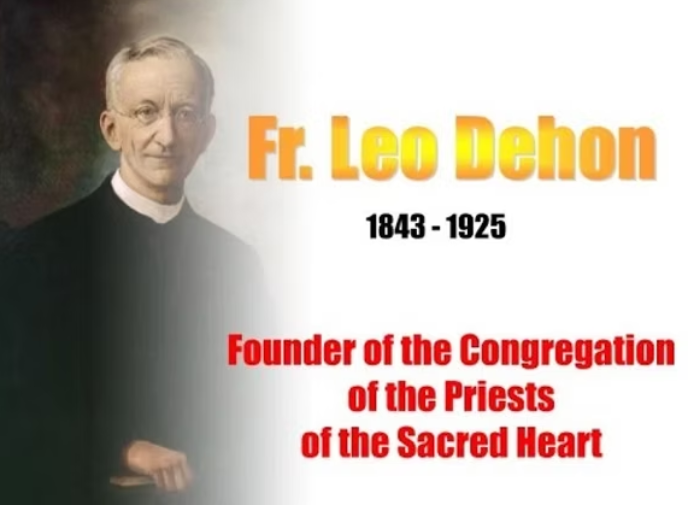
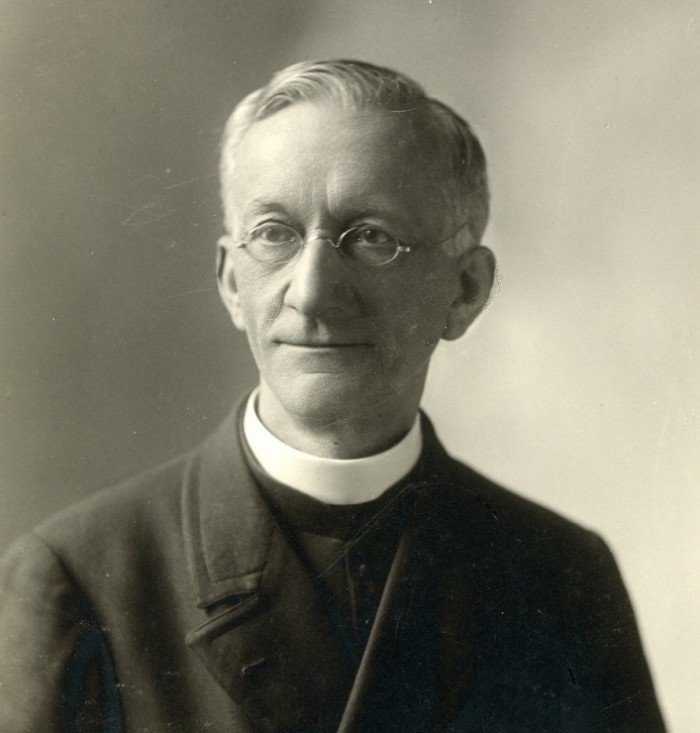
Leo Dehon was born on March 14th 1843, in La Capelle, France. From adolescence onwards he felt called to be a priest although it was against his father’s will. Following the wishes of his father he went and studied Civil Law in Paris and accepted the offer (again by his father) to go on a journey, to several regions, including the Holy Land, in an attempt to help him to forget the idea of becoming a priest.
But on his return, Leo asked to begin at Santa Chiara Seminary in Rome where he did his studies in Theology and Canon Law.
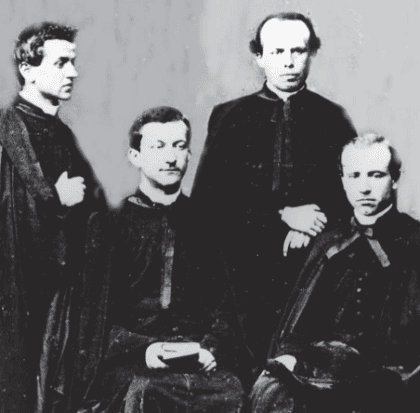
On December 19th, 1868 he was ordained a priest, in the presence and with the agreement of his parents. Appointed as one of the parish curates in St. Quentin, he accepted his mission with enthusiasm and was able to take on pastoral initiatives connected with the most diverse types of work: oratory, college, youth ministry, and the working class.
He was a cultured priest, both spiritual and dynamic, yet something was disturbing him. So after a long period of discernment, he made the decision to found the Congregation of the Priests of the Sacred Heart of Jesus on June 28th, 1878, the day of his First Profession. The principle aim of the Congregation was to be devoted to the Sacred Heart of Jesus and to spread his Reign in the hearts of the faithful and in society.
His cultural formation and sensibility led him to work in the social and missionary fields, spreading the social doctrine of the Church through conferences, articles, magazines, newspapers and books. Of particular note is The Social Christian Manual. He has also the merit of opening the Congregation to missionary work by sending many religious to the Americas and Africa.
Detailed life story
Dehon was the son of a wealthy family in the North of France (La Capelle ). Against the wishes of his father, Dehon decided to answer the call to the priesthood. He studied in Paris and Rome, earning doctorates in law, theology, canon law and philosophy. In 1871 he began his ministry as a parish priest in the working-class town of Saint-Quentin.
The living conditions of the workers and their alienation from the Church led him to promote numerous social and educational initiatives such as: a Youth Center for young workers, construction of homes for the workers, and groups to study the social situations of the people. As Dehon began to be more and more involved in social ministry, he began to feel the need of a community whose life would be rooted in God’s love symbolized in the Heart of Christ.
So in 1877 he not only founded Saint John’s College, but also the Congregation of the Oblates of the Sacred Heart, later renamed the Priests of the Sacred Heart. While his spirituality in the tradition of the French School (Bérulles) lead him to a life of union with Christ, the influence of the Ignatian tradition gave him the ability to live this union and make it fruitful in the midst of a society undergoing rapid change.
Dehon’s spirituality is mainly from these two traditions, which promote an awareness of the presence or absence of God in the midst of a world characterized by the social question. For Dehon, the contemplation of the pierced side of Jesus fully reveals the mystery of a love that is in solidarity with the fate of those who are oppressed and marginalized, especially the workers.
In 1889 he began the publication of a periodical entitled The Kingdom of the Heart of Jesus in Souls and in Society. Two years later Pope Leo XIII published the encyclical Rerum novarum, the same Pontiff then invited Dehon to preach his encyclicals.
In the 1890s Dehon put all his energy into the social formation of the clergy through conferences, seminars and publications. He urged them to «get out of the sacristy» and «go to the people.» His Social Christian Manual became an authoritative commentary on Rerum novarum. In the Christian Democracy movement Dehon tried to convince Catholics to join the democratic system and the struggle for a more just society. This commitment is the most authentic expression of Christian Democracy as «the kingdom of justice and charity for the good of all, with a particular focus on the workers and the poor … Christian democracy, the triumph of the Gospel, is the realm of the Sacred Heart. « Recognizing the commitment of the Dehon, Pope Leo XIII appointed him Consultor to the Index Congregation.
At the same time Dehon sought to consolidate his young congregation that was growing continuously. From the beginning he sent confreres to distant missions. In 1903 when the Priests of the Sacred Heart were expelled from France, their presence in Belgium, Luxembourg, Netherlands, Brazil , Congo and Italy provided a life beyond the tragedy of the France. The definitive recognition of his congregation by the Holy See came in 1906.
The last years of his life were marked by World War I and the resulting consequences for his works and his congregation. At the same time period saw an intensification of his activity as a spiritual writer. He reflected further and deepened his writings on spiritual life with Trinitarian hermeneutic. Even after leaving the public arena of social activity he remained faithful to the contemplative dimension of his life – an action that characterizes his life.
He wrote in 1910 : «I have been led by Providence to plow many furrows, but two in particular will leave a lasting mark: Christian social action and the life of love, reparation, and immolation to the Sacred Heart of Jesus. On every page, my books, translated into several languages, bear this dual movement originating from the Heart of Jesus. Thanks be to God» (NQT XXV /1910, 33).
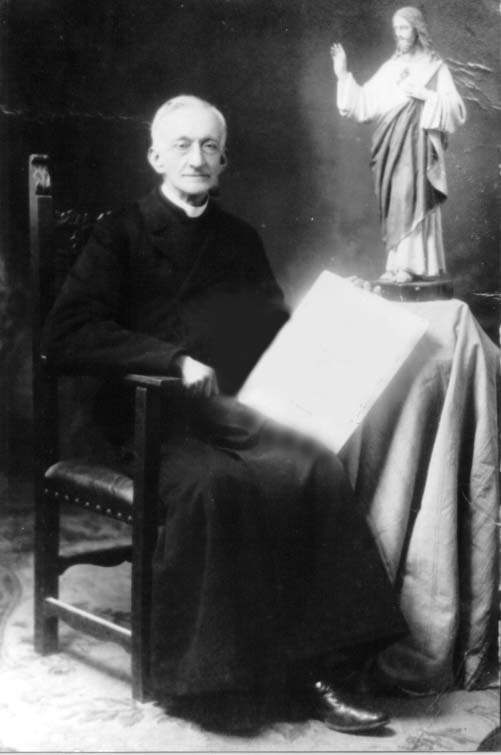
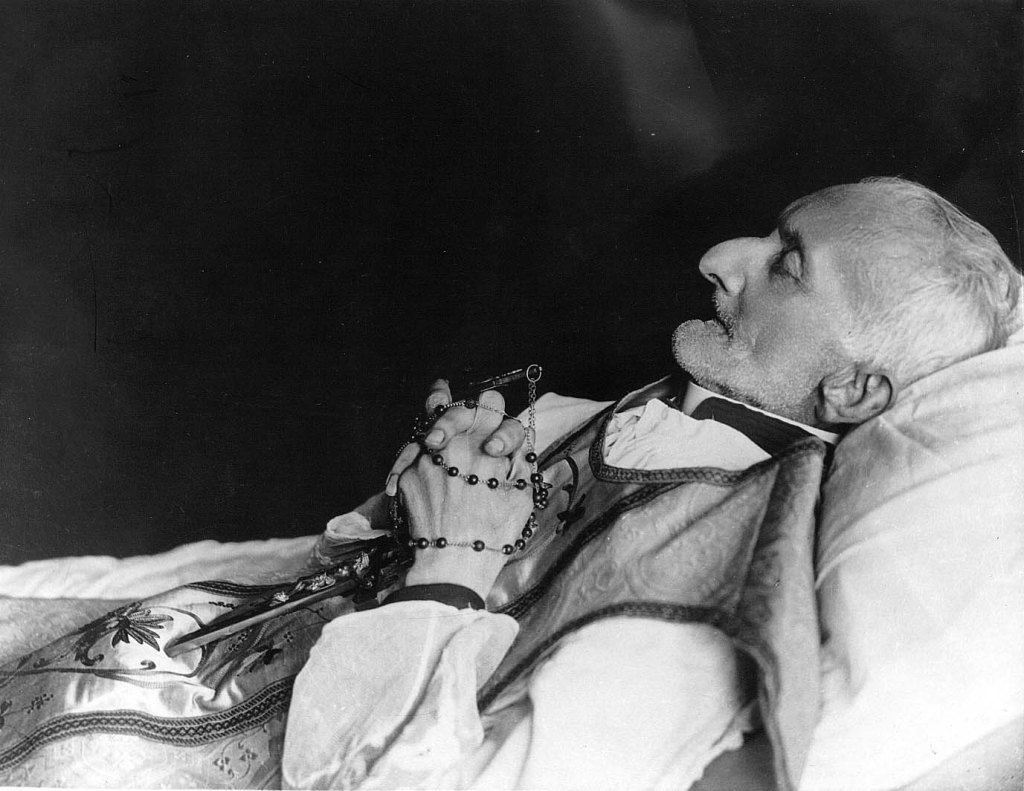
He asked his confreres to continue this life of love for the poor being convinced that for Jesus «the poor are another himself» (OSP IV, 138). On August 12, 1925, Leo Dehon died in Brussels. Today about 2200 Priests of the Sacred Heart (SCJs) are present in more than 40 countries around the world.